The Quiet Revolution Happening on Our Block: How Restaurant Closures Tell Stories
When Doors Close, Stories Begin
You probably walked past Nonna’s Kitchen a hundred times without realizing it was dying. The red awning got a little more faded each month. The lunch specials board hadn’t changed since March. By the time the “For Lease” sign appeared last Tuesday, the neighborhood had already moved on.
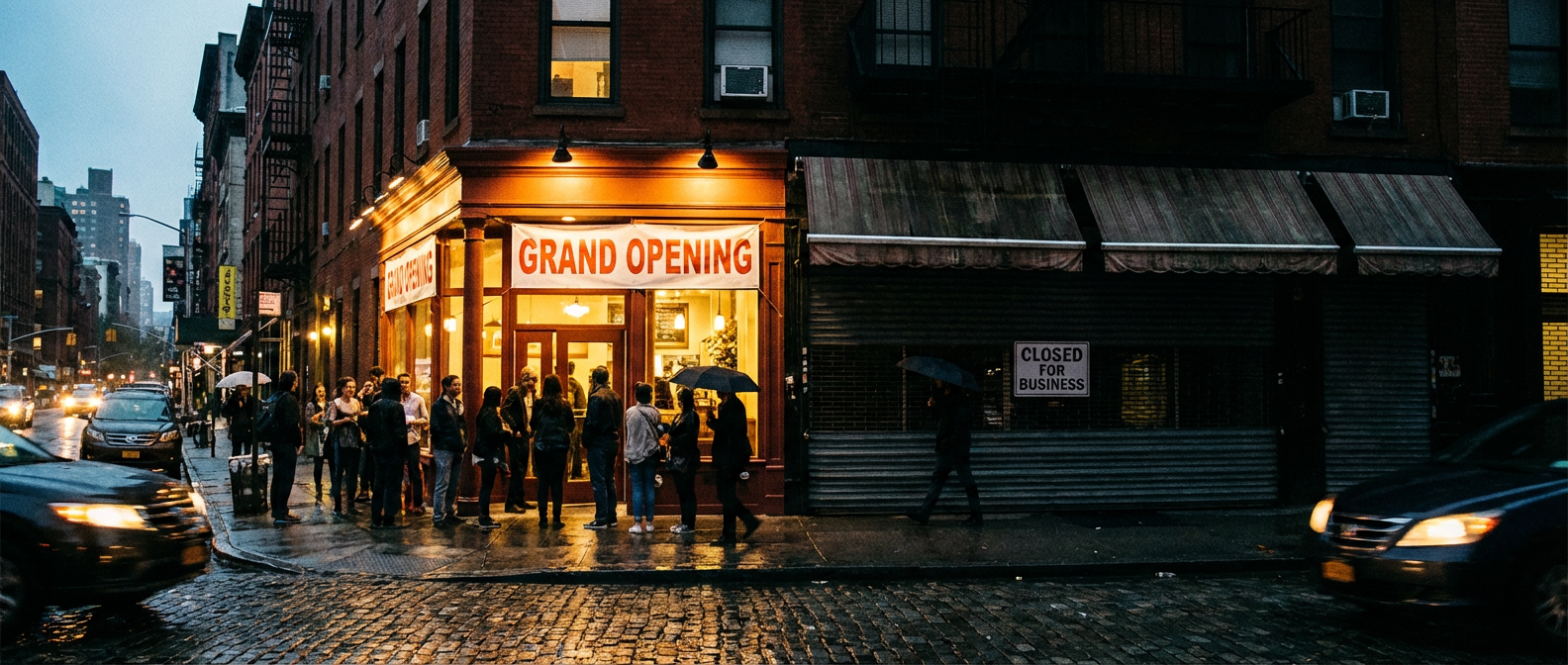
But here’s what you missed: Nonna’s wasn’t just another casualty of rising rents or changing tastes. Maria Benedetti had been running that place for eighteen years, serving her grandmother’s ragu recipe to the same customers who became her extended family. When her arthritis made it impossible to stand for twelve-hour shifts, she couldn’t bear to sell to someone who might change the menu. So she closed, quietly, with a handwritten note on the door thanking everyone for “making an old woman feel useful.”
That note stayed up for exactly four days before someone covered it with a slick poster advertising the incoming bubble tea franchise. The neighborhood’s memory, papered over in corporate teal and orange.

The Economics of Intimacy
Three blocks south, Samir is calculating whether Mesopotamia Café can survive another month. His Kurdish grandmother’s tea blend has a cult following among the graduate students who discovered the place during pandemic takeout runs. They come for the baklava that sells out by 2 PM and stay for conversations about poetry and politics that stretch past closing time.
Samir knows his regulars by their usual orders. Sarah gets extra cardamom in her Turkish coffee. David always asks for the vegetarian dolma without the pine nuts his girlfriend is allergic to. When rent jumped 40% this year, these customers started a GoFundMe that raised $8,000 in two weeks. It covered three months. Now what?
The landlord isn’t evil, just business-minded. He sees foot traffic and dollar signs where Samir sees a community center that happens to serve food. This is the fundamental tension reshaping every neighborhood block: the price of intimacy in an economy that rewards scale.
New Blood, Old Souls
Not every story ends in surrender. Last month, chef Elena Vasquez opened Corazón in the space that housed three failed restaurants over two years. She spent six months before opening just talking to neighbors. What did they miss? What did they need?
The answer surprised her: breakfast tacos, but make them good. Real good. So she sources masa from a family mill in Texas, gets eggs from a farm forty minutes outside the city, and makes her own chorizo. Her morning regulars include the mail carrier who stops by at 7 AM sharp and the night-shift nurse who considers Elena’s breakfast burrito the perfect end to a long day.
Elena hired two cooks from the neighborhood, including Miguel, who lost his job when the previous tenant closed. She pays above minimum wage and splits tips evenly. When I asked why, she laughed. “These people are feeding people. That’s sacred work. You don’t get rich doing sacred work, but you sleep better.”
The Chains and the Chosen
The bubble tea place that replaced Nonna’s opened last week with a line of teenagers wrapped around the block. Their Instagram is pristine. Their marketing budget probably exceeds Mesopotamia Café’s annual revenue. The drinks are fine, the aesthetic is flawless, the experience is forgettable.
But here’s the thing about neighborhood culture: it’s not a zero-sum game. Those teenagers spending money on trendy drinks today might become the adults seeking authentic Kurdish tea tomorrow. The question isn’t whether chain restaurants belong in neighborhoods, it’s whether neighborhoods can maintain the diversity of options that makes them interesting places to live.
Two doors down from the bubble tea spot, Rashid just opened a weekend popup inside Lucky’s Barber Shop. Friday and Saturday evenings, he transforms the space into a Somali supper club. Thirty seats, family-style service, traditional music, and stories about the dishes his mother taught him. It’s booked solid through December, mostly through word-of-mouth and a simple Instagram account with 400 followers.
What Stays, What Goes, What Grows
Every neighborhood is a living document, constantly being rewritten by the people who choose to invest their time and money there. The restaurants that survive aren’t necessarily the best or most profitable, they’re the ones that figure out how to matter to people’s daily lives.
Mesopotamia Café’s future remains uncertain, but Samir isn’t giving up. He’s exploring a partnership with Elena at Corazón for weekend dinner service. Different cuisines, shared values, split overhead. Maybe survival looks like cooperation rather than competition.
Maria Benedetti, meanwhile, has been teaching her ragu recipe to Elena’s sous chef twice a week. No money changes hands. Just knowledge, passed along because good food shouldn’t die with its creator. The recipe might not return to the same corner, but it will return somewhere.
Next time you walk through your neighborhood, pay attention to the empty storefronts and the full ones. Look for the handwritten signs, the irregular hours, the places where the owners know your name. These are the spaces where culture lives and dies and gets reborn, one meal at a time. And if you’re lucky enough to find a place that feels like home, show up. Order the special. Tip well. Leave reviews. Culture isn’t a spectator sport, it’s something we build together, one conversation and one meal at a time.

The Problem With Treating Culture as a Perk

Our Future with AI: Art’s New Collaborator
The Narrative Infrastructure of Organizations: How Corporate Stories Become Load-Bearing Walls
About Author
