Our Future with AI: Art’s New Collaborator
Hey tech enthusiasts, it’s a sunny day and my coffee is right on point, so I’ve been thinking a lot about how artificial intelligence is really stepping up its game in the creative arts. You know, AI isn’t just about robots and algorithms crunching numbers in some dark data center. Nope, today we’re looking at how AI is leaving its mark on art and creativity, arguably the most human territory it could wander into. So, grab a drink (go fancy—add a cup of latte art, maybe?), and let’s chat about this future where AI becomes our co-artist.
The Bold Entrance of AI into the Arts World
Let’s roll back the clock just a bit. It wasn’t that long ago when the idea of AI creating art seemed almost absurd. I mean, could a machine understand Picasso’s brushstrokes or replicate the hazy depth of a Turner seascape? Turns out, yeah, sort of. Enter Generative Adversarial Networks (GANs), a fascinating tech-cocktail concocted by Ian Goodfellow and his prodigy friends. This nifty neural network approach lets two AI models duke it out, pushing each other to create art good enough to enter a museum alongside the old masters. They’re like Michelangelo and Raphael of the silicon world, minus the rivalry dinner plays.
Painting Outside the Lines
So, where exactly are we seeing AI paint outside the lines? Take, for example, the work done by companies like OpenAI and Google’s DeepMind. They’ve whipped up AI models that can create art and enhance existing work in ways that would have old-school artists whispering “witchcraft.”
More recently, I stumbled across a project where an AI recreated Rembrandt. The detail and technique were so uncannily true to form that it’s a little freaky but captivating. These AI models analyze countless artworks, breaking them down into mind-numbing matrices that they use to generate new pieces. It’s almost like they’re channeling the essence of creatives past.
AI-Powered Music: Humming a New Tune
Now, hold onto your headphones because it doesn’t stop at paints and palettes. We’re knee-deep into AI flexing its musical muscles. Remember Jukedeck? Before being scooped up by TikTok’s parent company, ByteDance, these brainiacs were pioneering AI-composed music. Imagine a world where your favorite new album could be the product of a few lines of coded musical genius.
AI in music isn’t about replacing the Mozarts and Bachs of the world but providing new tools to elevate music to freshly uncharted realms. Think electronic beats spun with a touch of AI magic, creating tunes humans alone might have never dreamed up. It’s a bit like having a jam session with an Android band member who’s always up for experimenting with the scales.
From Canvas to Code: AI’s Artistic Ensemble
Alright, I’ve noticed AI isn’t in this game for selfish glory. It’s not going to steal the job of every starving artist. Instead, AI is beautifully collaborative. It’s like having a co-pilot who doesn’t hog the radio or judge your artistic whims. Musicians and visual artists are now using AI tools to boost their creativity without losing the personal touch that makes art, well, art!
Bridging the Gap with AI
Sure, AI can paint and sing, but it’s also helping art become more accessible. Projects that use AI to create art are finding their way into the hands of budding creatives and hobbyists. Who wouldn’t want to Picasso-ize their phone photography or lean on AI to write cinematography-worthy scores for their latest YouTube video? What we’ve got is AI democratizing creativity, making sure everyone, not just those with traditional skills, can be a part of the show.
The Philosophical Palette: Ownership and Authenticity
Here’s the kicker, folks. We’re zooming in on the big brainy questions: Who owns AI-generated art? Can AI think and feel like a human would about its creations?
There’s this one anecdote I love: Someone once remarked to Picasso, “I could do that!” pointing to a minimalist abstract piece. Picasso, in only a way he could, retorted, “But you didn’t.” Funny enough, the heart of the matter here is authenticity. While AI can weave masterpieces, the soul of human creativity is still something uniquely ours. AI art might be impressive and commercially viable, but it’s not doused in the erratic, turbulent emotions and life experiences that color human art.
The Ownership Quandary
Ownership is a bit of a Gordian knot waiting for some sharp minds to untangle. Are these AI models the ‘artists’, or do we consider them tools in the hands of human creators? Legal minds are still scratching their heads about copyright implications.
Gaze into the Horizon: AI’s Artistic Future
Looking down the line, AI as our artistic companion is bound to grow richer and more sophisticated. Imagine AI-generated art hanging in the Louvre or music echoing in major concert halls worldwide, composed by what essentially started as loops of code. Speculative, yes, but tantalizingly within the realm of possibility.
What Lies Ahead
AI’s role in the arts is a mosaic still coming together but one with endless potential tiles. As AI becomes more integrated into our creative process, we could be on the brink of an artistic renaissance, a splurge of innovation freed from the limitations of human hands alone. We might see a future where AI becomes part of the curriculum for budding artists and musicians, an artistic renaissance reborn.
Our creative work will always have AI’s unique flair to push boundaries, whether it’s alone or by our side. Maybe we’ll tell future generations about a time when art was a purely human domain, but by then, hopefully, AI and humans alike will be strumming to the same, harmonious tune.
And there you have it! A glimpse into the possibilities AI holds in transforming artistic expression. Now, if you’ll excuse me, I’m going to train an AI to paint a coffee-stained mug. Who knows? It might be the next Mona Lisa, but with more caffeine!
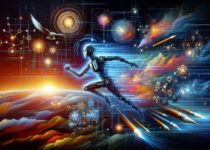
Today’s Frontier in Emerging Tech: Artificial Intelligence’s Leap in Creative Arts

Why Feedback Culture Only Works When Power Dynamics Are Addressed
Why Organizations Punish the People Who Actually Document Decisions
About Author
