Natural Wine’s Hangover Is Over: How the ‘Low-Intervention’ Category Fractured in 2025 and What Serious Drinkers Are Choosing Now
The Year Natural Wine Hit a Wall
Here’s what happened: for the first time since natural wine crawled out of Paris basements and into American wine shops, people stopped buying it. Not dramatically. Not dramatically enough that your local wine bar pulled the orange wines off the list. But in 2024, natural wine retail sales in the U.S. dropped 6 percent in volume, according to Wine & Spirits Wholesalers of America data. Six percent doesn’t sound like much until you remember that this category has been climbing for two decades straight.

The decline mattered less for what it showed about consumer taste and more for what it revealed about a category that had stopped being about philosophy and started being about marketing. Natural wine had become so commercially attractive that anyone with a distributor relationship and a vague commitment to “minimal intervention” could slap the label on something and move volume. The term itself had rotted out from the inside.
When the Science Started Getting Awkward
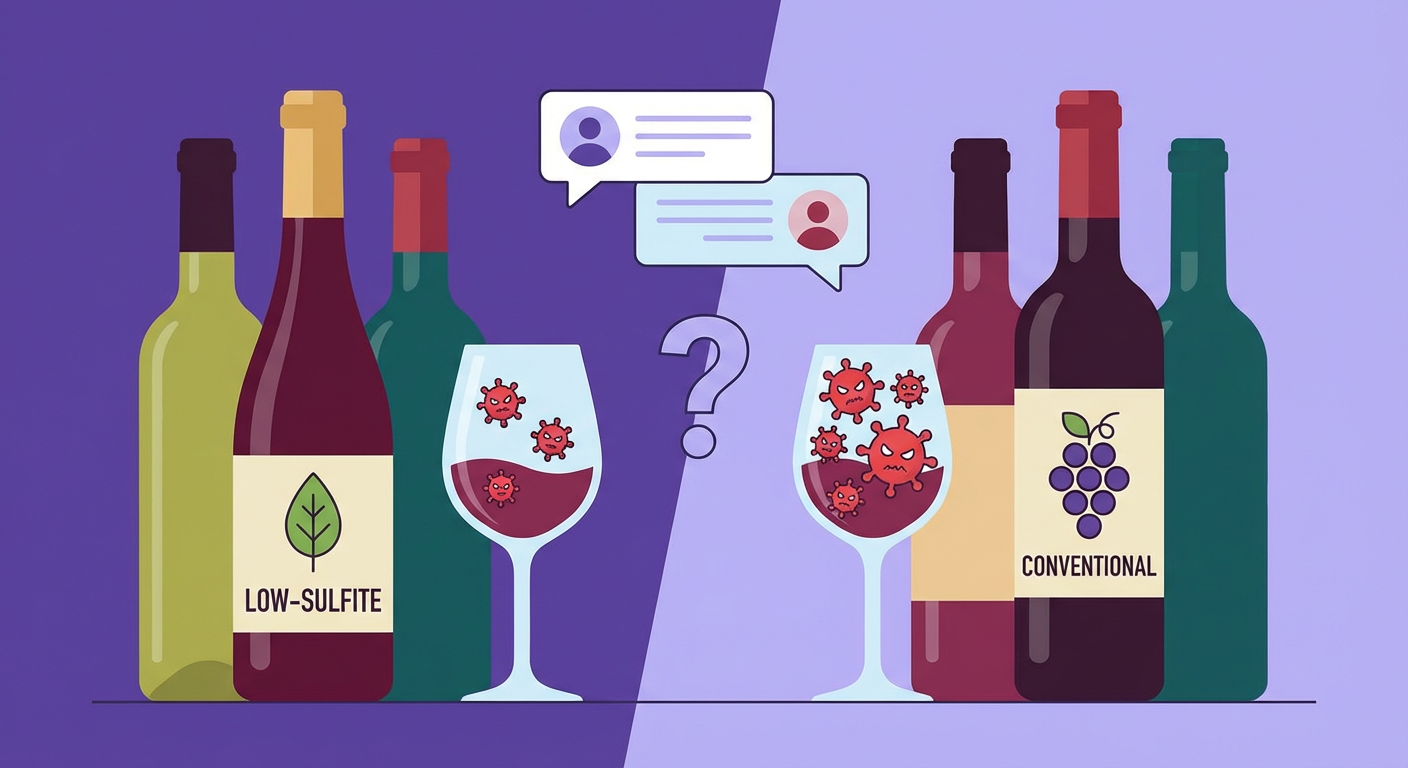
Last year a study landed in American Chemical Society Food Chemistry Publications that nobody in the natural wine world wanted to discuss at parties. Researchers tested a selection of wines marketed as low-sulfite or natural and found histamine and biogenic amine levels significantly higher than what you’d find in conventional wines. Translation: some of those headaches people blamed on sulfites weren’t about sulfites at all. They were about bacteria having a field day in minimally managed fermentation.
This wasn’t a gotcha moment for big wine. It was a reckoning. People who had built their identity around natural wine, bartenders, shop owners, the friends who gave you that amber-colored Georgian thing for your birthday, suddenly had to have uncomfortable conversations about what they were actually serving. The marketing claims that had sounded romantic (“wild fermentation,” “no manipulation”) started sounding like excuses for inconsistency.
The study cracked open a debate that had been brewing quietly for years: was natural wine about quality or ideology? Because if it was about quality, you had to start acknowledging that not everyone doing natural wine was achieving it. And if it was ideology, then maybe some of the health claims needed to be retired.
The Category Refined Rather Than Collapsed
But here’s where it gets interesting. Instead of watching the whole natural wine movement implode, what actually happened was more sophisticated. Pét-nat, that slightly fizzy, unpredictably delicious style of wine, grew 14 percent in the same period while the broader category softened. People weren’t abandoning the ethos. They were just getting pickier about how they wanted it expressed.
Pét-nat won because it offered something concrete: the small bubbles, the energy, the sense of occasion. It was natural wine with a specific identity rather than a catch-all category for anything vaguely funky. You weren’t buying it as a statement. You were buying it because it tasted good at a certain moment.
Meanwhile, Jenny & François Selections, one of the early American importers who basically helped define what natural wine meant in this country, made a quiet but deliberate shift. They stopped using “natural wine” in their catalogs and started saying “living wine” instead. This wasn’t semantics. This was an importer saying publicly that the term had become commercially corrupted and unusable. That’s your signal that something fundamental has shifted.
The Serious People Got Serious About Sulfites
The most telling sign of what’s happening came from wine education. The Wine Scholar Guild reported a 28 percent jump in enrollment in its French Wine Scholar program for 2024-2025. More students than ever. But the instructors noticed something different: these students were arriving with actual questions about sulfite science. Real questions. Not ideological posturing about why sulfites are poison, but genuine curiosity about chemistry, fermentation management, and what different sulfite levels actually mean for a wine’s stability and taste.
This matters because it’s the opposite of where the conversation was five years ago. Back then, people were drawn to natural wine because it was the alternative, the cool thing, the stuff that made you feel like you understood something most people didn’t. Now the people showing up to serious wine education are already past that. They want to know the mechanisms. They want the category to be real.
What Actually Works Now
The wines winning right now are the ones with clarity of purpose. They’re not trying to be natural wine the way “natural” became an aesthetic. They’re being specifically what they are: a wine from a specific producer who makes choices about intervention and hands-off fermentation based on what that particular wine needs, not what the market wants to hear.
You’re seeing this with serious importers and bars getting more selective about who they work with. The producers they’re choosing aren’t necessarily doing less work. Sometimes they’re doing more. But they’re being transparent about what they’re doing and why. Sulfite levels are listed. Fermentation notes are available. There’s accountability instead of mystery.
The natural wine moment was real. It shifted how people thought about wine, pushed back against industrial farming, made space for quirky producers with authentic voices. But the movement phase is over. What comes next is the maturity phase, where the category either proves it’s about genuine quality and transparency or keeps sliding into becoming just another marketing angle. Based on what’s actually selling and where the serious conversation is heading, the category looks like it’s choosing the first path. That’s worth paying attention to.

Your Community Garden Isn’t Actually About the Tomatoes

The Ceramics Wave Broke: Inside the Underground Shift to Ferro Cement

The Slow Cinema Movement Is Real, and Your Gen Z Friends Are Actually Into It (No Cap)
About Author
