The Slow Cinema Movement Is Real, and Your Gen Z Friends Are Actually Into It (No Cap)
The Uncomfortable Truth About Why We’re All Moving Slower
There’s this moment that keeps happening at the Metrograph in New York that I can’t stop thinking about. Three consecutive weekends in January. Sold out. Completely packed. The draw? Chantal Akerman’s complete works. Over 1,800 people chose to spend their weekends watching films where sometimes nothing happens for five full minutes. Where a camera sits on a woman’s face while she exists. Where time moves like molasses and you’re supposed to feel something about it.
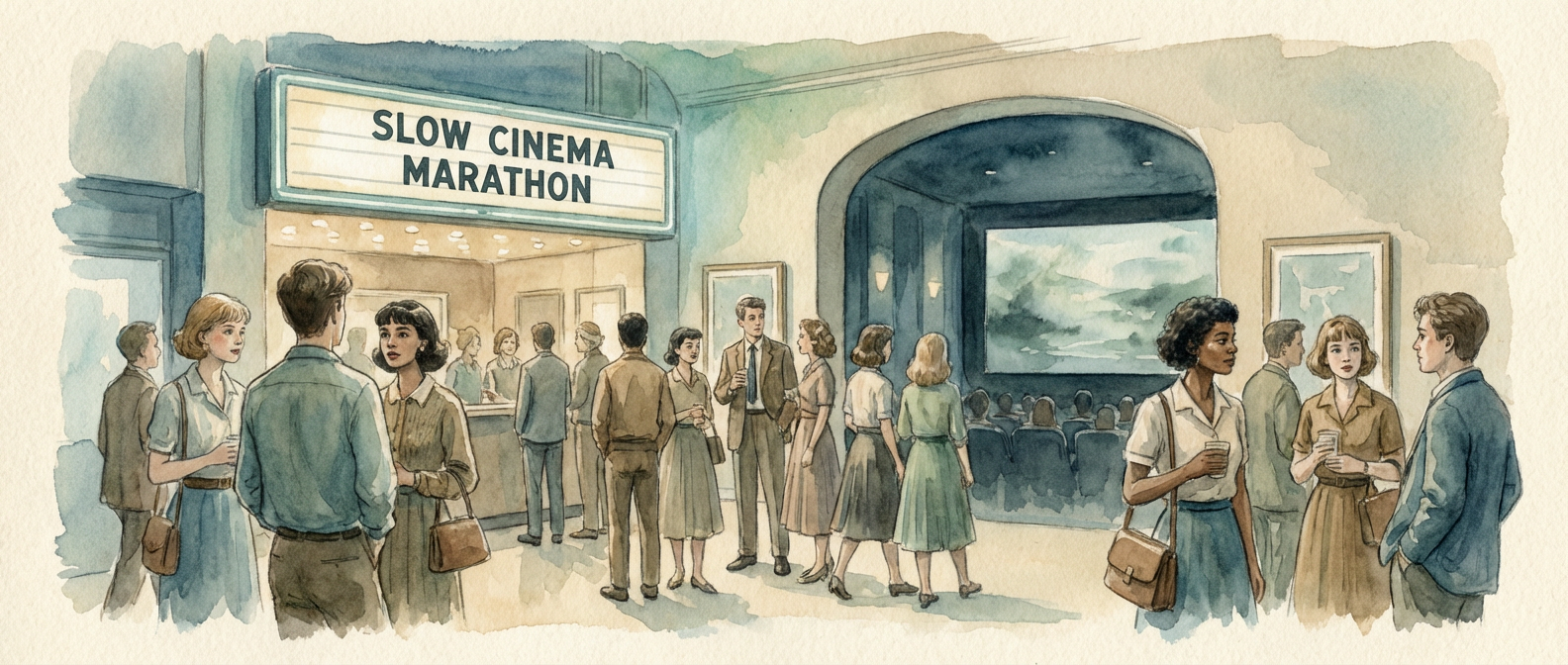
This isn’t a niche thing anymore. This is actually happening. And I think we need to talk honestly about what it means that Gen Z is showing up for this in droves.
The numbers are there. Streaming data from Criterion Channel’s editorial on the slow cinema surge shows a 45 percent jump in viewing hours for what they’re calling “slow cinema” among people aged 18 to 28 between 2024 and 2025. That’s not a marginal increase. That’s a shift. Films defined by longer shots, deliberate pacing, and a resistance to the quick-cut grammar we’ve all been trained to expect. And people my age and younger are choosing to watch them. On purpose. When they could be watching literally anything else.
Why the Arthouse Theater Is Suddenly the Place to Be
Let’s be real for a second. There’s something performative about showing up to a slow cinema marathon. I know it. You know it. We all know it. The person who posts about finally understanding Tarkovsky is doing something that reads a certain way. But here’s what I’ve actually observed in these spaces: people genuinely don’t want to leave when the films end. The conversations happening after screenings are messy and uncertain and real. Nobody’s pretending to understand everything. Everyone’s actually grappling with something.
The BFI’s 2025 repertory programming report noted that their Tarkovsky retrospective was the most attended series since 2019. Six thousand four hundred people over three weeks in London. That’s not a curiosity spike. That’s momentum.
There’s also the very practical part of it: these theaters are beautiful. They’re quiet. There’s no algorithm deciding what plays next. You sit in a room with strangers and you all watch the same thing at the same pace. In a world where every other experience is personalized and fragmented, that’s almost radical. It’s collaborative in a way TikTok could never be.
The Science of Slowing Down (And Why It Actually Matters)
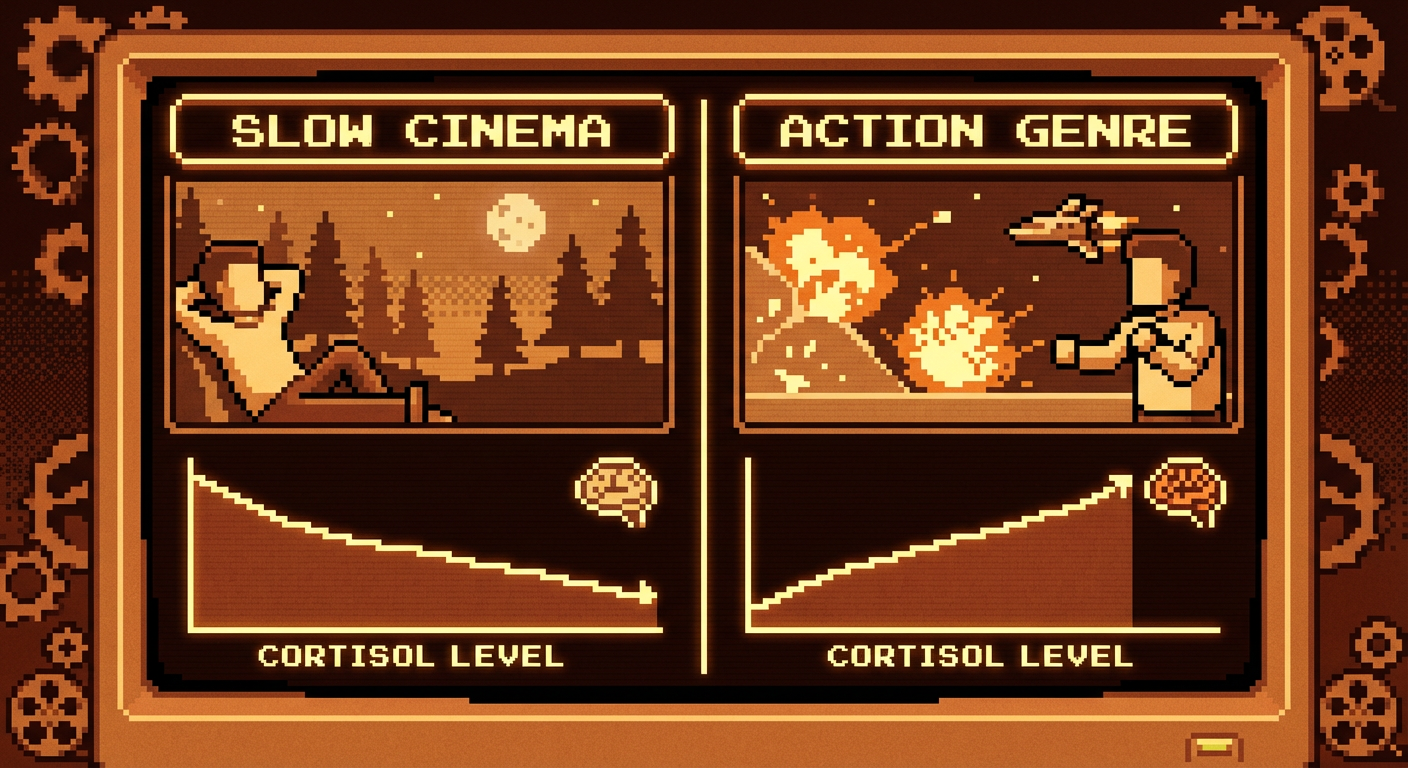
Here’s where it gets uncomfortable. A study published in “Projections: The Journal for Movies and Mind” in late 2025 found that people who watch slow cinema show measurably lower cortisol levels after screening compared to people watching action films. Lower stress hormones. Actual physiological calm.
That’s not art criticism. That’s biology. And it suggests that the appeal of slow cinema isn’t actually about being pretentious or performing sophistication. It’s about our nervous systems being absolutely fried from constant stimulation, and seeking out something that actively counters that. That’s the uncomfortable part. We’re not choosing slow cinema because we’ve developed some refined aesthetic taste for it. We’re choosing it because we’re desperate for our bodies to feel normal again.
The viral “slow film challenge” that exploded across Film Twitter and Letterboxd in February accumulated over 2.1 million posts. One canonically slow film per week for a month. That’s not ironic participation. That’s people making space in their lives for something different. That’s real.
The Question Nobody’s Really Asking
But here’s what I wonder. Is this sustainable, or is this the cultural equivalent of buying a yoga mat? Are we actually changing how we move through the world, or are we creating a new kind of content consumption to post about? The fact that we’re quantifying and tracking and making challenges out of slow cinema feels… slightly antithetical to the whole point, doesn’t it?
I don’t have an answer to that. I’m asking because I’m not sure. I’ve seen people leave four-hour Akerman screenings looking genuinely transformed, and I’ve also seen people live-tweeting them the whole time. Both are happening. Both are real.
What Actually Comes Next
The arthouse theaters are going to keep selling out. More films that reject conventional pacing are going to get distribution deals. The streaming platforms are going to keep building out their slow cinema sections. This isn’t a blip. Whether that’s a good thing or a complicated thing is something we’re all figuring out together.
What I know for certain is that something shifted. Young people are choosing difficulty. They’re choosing to sit with boredom and see what’s on the other side of it. They’re showing up in person for it. They’re paying for it. They’re talking about it in ways that actually matter.
If you’ve been curious about any of this, now’s the moment. Pick a slow film you’ve been meaning to watch. Watch it without your phone nearby. Come back and tell me what happened to you in it. I genuinely want to know.

Why We Need to Talk About Burnout as a System, Not a Symptom
The Status of Stress: How Organizations Turn Busyness into a Badge of Honor
Why Documentation Culture Is a Power Move Disguised as Helpfulness
About Author
