When the Market Became the Center of Everything
The Saturday Morning Shift
Maya sets up her spice stall at 5:47 AM every Saturday. Not 5:45, not 5:50. She’s been doing this for eight years now, and the ritual has become surgical in its precision. First the burgundy tablecloth. Then the glass jars arranged by color temperature, turmeric to sumac to black cardamom. The handwritten signs go up last, each one angled exactly fifteen degrees toward the main walkway.
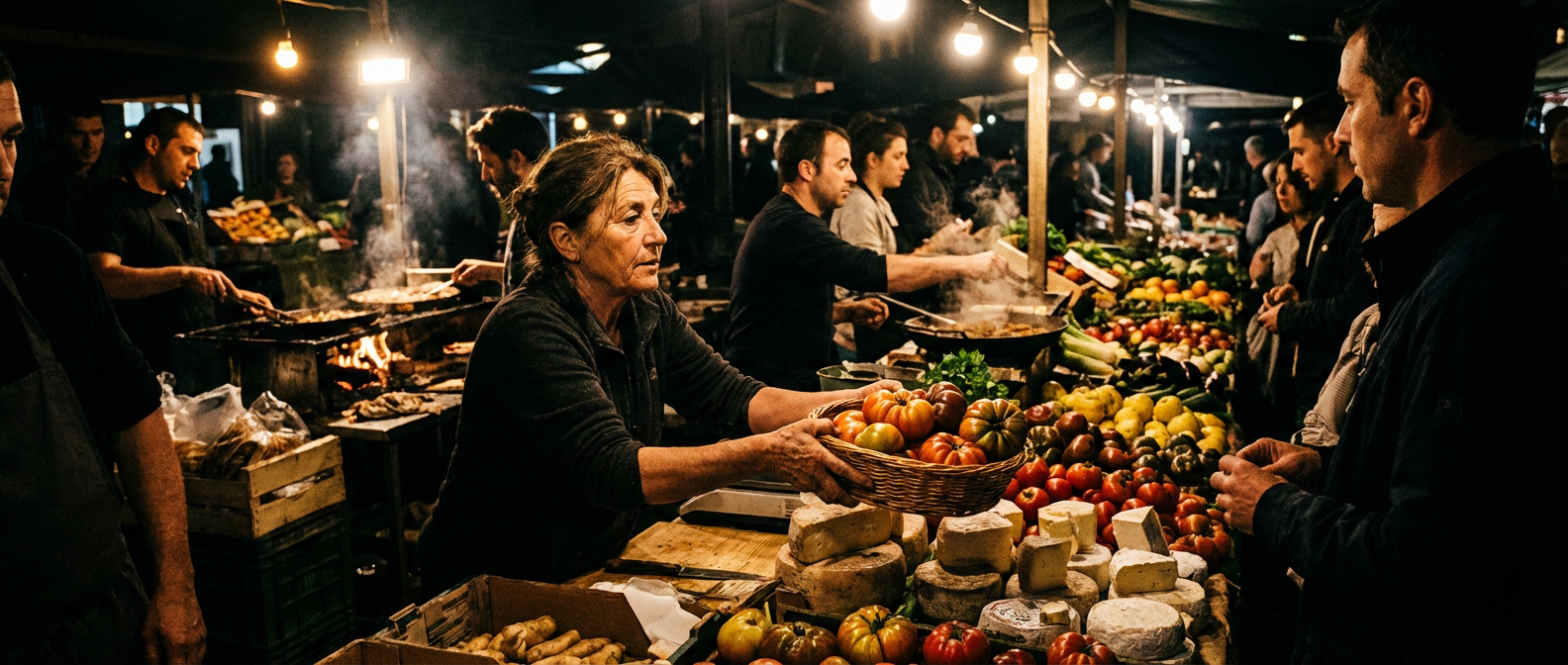
I watched her do this last weekend while nursing my first coffee of the day. What struck me wasn’t the routine itself but how other vendors had started copying her timing. Carlos with his sourdough loaves arrives at 5:52. The flower lady, whose name I still haven’t learned but whose dahlias I’ve been buying for three months, pulls up at 5:55. They don’t coordinate this. They just know.
This synchronization didn’t happen overnight. Two years ago, vendors were still showing up until 7 AM, some even later. The market felt scattered, incomplete. Now there’s this collective rhythm that transforms the space. By 6:15, the market has weight. Gravity. You can feel it pulling the neighborhood toward itself.

The Pickle Empire
Jin started with three varieties of kimchi in mason jars. That was eighteen months ago. Last Saturday I counted fourteen different fermented vegetables across his expanded setup, plus a line of people that stretched past two other stalls. He’s got regulars now who pre-order through Instagram DMs. Corporate catering requests. A waiting list for his fermentation workshops.
But here’s what’s really interesting about Jin’s rise. He didn’t just scale up. He created a knowledge ecosystem. Every customer gets a two-minute explanation of the fermentation process. He posts daily photos of his bubbling crocks with timestamps and pH readings. His Instagram stories have become a masterclass in beneficial bacteria.
The result isn’t just business growth. It’s cultural shift. Half the neighborhood is now fermenting something at home. The local kitchen store started carrying pH strips because of demand Jin created. Three other vendors have added fermented elements to their offerings. He didn’t just build a pickle empire. He made fermentation cool again.
The Language of Placement
Stand at the market entrance and watch how people move through the space. There’s a pattern, a flow that vendors understand instinctively. The coffee cart positioned itself at the first corner for obvious reasons. People need caffeine before they can make food decisions. But Maya’s spices are three stalls down, exactly where people pause after their initial coffee-fueled reconnaissance lap.
The bread vendors cluster near the middle, creating a natural gathering point. Conversations happen here. Recommendations get shared. “Try the sourdough with the honey from that woman over there.” These aren’t random relationships. They’re the result of months of observation and adjustment.
Even the relative newcomers understand this geography now. The young couple selling house-made pasta positioned themselves across from the tomato vendor. Not next to him, where they’d be competing for space, but across, where customers naturally flow after buying sauce ingredients. It’s marketplace choreography, and everyone’s learning the steps.
The Ripple Effect
Three blocks away, Rosario’s corner store now stocks Meyer lemons because market customers started asking for them. The wine shop added a natural selection to match the market’s organic produce focus. Even the hardware store carries more canning supplies than it used to.
This isn’t gentrification in the typical sense. It’s something more organic. The market vendors aren’t replacing existing businesses. They’re elevating the entire food culture of the neighborhood. Local restaurants now source ingredients from Saturday vendors. The high school culinary program brought students for a field trip last month.
The Saturday market has become a cultural anchor that’s shifting everything around it. Property values are rising, yes, but so is the actual quality of life. People walk more. They know their neighbors’ names. They understand seasonality in ways they didn’t before.
What Made This Possible
Markets exist everywhere, but they don’t all achieve this kind of cultural resonance. The conditions here were specific. A neighborhood in transition but not displacement. A critical mass of people with disposable income for premium food but also genuine interest in provenance and craft. City regulations that supported rather than strangled small vendors.
The timing mattered too. Post-pandemic hunger for human connection. Growing awareness of industrial food system problems. A generation that values experience over possessions. Social media that helps small businesses without requiring huge marketing budgets.
But mostly it was the vendors themselves. People like Maya and Jin and Carlos who understood that they weren’t just selling products. They were curating experiences, building relationships, creating culture. They showed up consistently, shared knowledge generously, and trusted their customers to appreciate quality.
The market works because everyone involved has skin in the game. Vendors who depend on repeat customers provide better service. Customers who know the farmers by name waste less food. It’s a feedback loop that reinforces itself every Saturday morning at 5:47 AM when Maya spreads out that burgundy tablecloth.
Next Saturday, get there early. Watch the setup process. See how a collection of individuals transforms into a community marketplace. And definitely try Jin’s latest fermentation experiment. He’s working on pickled watermelon rinds now, and honestly, it shouldn’t work but it absolutely does.

The Ball That Never Rolls: Reading ‘I Had Potential’ as a Diagram of Stalled Motion
The Warning Label You Wear: What ‘Not Friendly, Do Not Touch’ Says About Group Membership
The Culture Fit Row: How One Line on the Interview Scorecard Selects for Conformity
About Author
