Navigating the Future of Artificial Intelligence: The Rise of Generative AI
Hello, fellow tech enthusiasts! Welcome to another exploration of how emerging technologies are reshaping our world. Today, we’re diving into a particularly buzzy subset of artificial intelligence—Generative AI. If you’re like me and constantly mesmerized by the potential of AI to not just mimic tasks but create entirely new possibilities, then this is right up your alley.
Introduction
In recent years, artificial intelligence, specifically Generative AI, has developed beyond our collective expectations, morphing into a force that’s both innovative and, sometimes, a wee bit intimidating. Generative AI isn’t just a digital mimic. It’s a digital artist, scientist, and inventor rolled into one. By generating text, imagery, music, and even entire virtual worlds, this technology is redefining creative boundaries.
What is Generative AI?
Before we get too carried away by the possibilities, let’s break down what Generative AI actually is. At its core, Generative AI refers to algorithms (commonly powered by neural networks) that learn from existing data to generate new, original content. This goes beyond mere data replication. Think of it as teaching a computer to be its own Monet or Shakespeare.
We’ve seen standout models like OpenAI’s GPT series, DALL-E, and MidJourney making waves across industries with their uncanny ability to generate human-like text and images. These models are fueled by large datasets and are trained to understand patterns, making them both predictive and creative.
The Impact Across Industries
Creative Arts
Perhaps the most visually apparent application of Generative AI is within the creative arts. Tools like DALL-E have made it possible for artists—or even those who don’t consider themselves artists—to create compelling visuals from simple text prompts. The ability to fine-tune or direct the models to capture particular styles or themes has opened new avenues for creativity. Museums and galleries are now host to exhibitions where AI-generated artwork hangs alongside pieces by celebrated human artists.
Writing and Publishing
Generative AI is also causing seismic shifts in writing and publishing. Content creation is becoming accelerated and diversified. Imagine automated systems drafting personalized emails, social media posts, or news articles within seconds. Companies keen to maintain a human touch while benefiting from AI’s speed are exploring co-creative processes where machine drafts are refined by human editors. It’s a dance of silicon and flesh that’s yielding some surprisingly high-quality results.
Healthcare
In healthcare, Generative AI holds promise in drug discovery and genetic research. By synthesizing thousands of potential solutions in chemical treatments, AI can accelerate the research process, reducing time and costs. AI capabilities extend to personalizing treatment plans based on genetic information, moving us closer to precision medicine.
Video Games and Virtual Reality
Generative AI is redefining immersive experiences in gaming and virtual environments. Developers can now leverage AI to create dynamic storylines, characters, and worlds, tailored to user interactions in real-time. This not only enriches the player’s experience but also makes game development more efficient and innovative.
Challenges and Ethical Considerations
The Risk of Over-Reliance
As with any transformative technology, there’s the concern of over-reliance. An industry solely driven by AI may risk stifling human creativity. AI should augment rather than replace human input, ensuring that the creative process remains collaborative.
Ethical Concerns
With great power comes great responsibility, and Generative AI is no exception. There are concerns about the misuse of AI in generating deepfakes or misleading information. This calls for robust regulations and ethical guidelines to ensure responsible deployment. Companies and researchers are emphasizing Explainability AI, a direction aimed at making AI decisions more transparent and interpretable for humans.
Intellectual Property
The question looms: who owns AI-generated art? Is it the creator of the AI, the user, or is intellectual property an outdated concept in the face of infinite generative variations? This gray area is leading to conversations that could reshape copyright laws and the broader legal landscape around digital content.
The Future of Generative AI
Looking forward, the potential for Generative AI appears inexhaustible. Researchers and innovators are continually finding new niches where AI can contribute. As technology develops, expect generative models to become more sophisticated, learning from less data and overcoming current limitations in creative expression.
Democratization of Creativity
Generative AI has the potential to democratize creativity, providing individuals with access to tools that were once the domain of highly trained experts. This democratization opens up possibilities for storytelling, design, and innovation across global communities.
Expanding Human Thought
Beyond the tools and products, Generative AI could play a profound role in expanding human creativity. By presenting novel solutions and perspectives, AI can inspire new ways of thinking that push the boundaries of science, philosophy, and art.
Conclusion
The rise of Generative AI represents a major shift in how we interact with technology and how technology, in turn, interacts with the world. While some might view this with apprehension, there’s an undeniable opportunity for those willing to engage with these tools judiciously and ethically.
AI’s role in our lives will continue to grow, but the direction it takes is up to us. By harnessing its capabilities responsibly, we can drive technological advancement toward a future where humanity and artificial intelligence coexist in a symbiotic relationship that celebrates creativity and innovation.
So, what are your thoughts on Generative AI? Are you leveraging it in your work or hobby? Drop a comment below—I’d love to hear your perspectives and experiences. Stay curious, and until next time, keep pushing the boundaries of what’s possible!
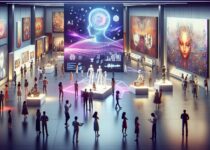
Embracing the Future: AI in Creative Arts
Our Local Theater Scene Is Dying, And We’re All Pretending It’s Fine

How Unwritten Rules Determine Who Advances
About Author
