The Warning Label You Wear: What ‘Not Friendly, Do Not Touch’ Says About Group Membership
There is a particular kind of person who wears a warning sign to a party. Not a literal one — though the shirt in question comes close. The design is plain enough: NOT FRIENDLY DO NOT TOUCH in warning-sign lettering, a yellow caution triangle, and a crossed-out hand. It is the visual grammar of a hazard label, the kind you see on a wet floor or a high-voltage cabinet, applied to a human torso.
I have been thinking about this shirt less as merchandise and more as an artifact of group membership. Because the interesting thing about a warning sign is not what it says. It is who it is for.
A wet-floor sign is not addressed to the person who placed it. It is addressed to everyone else — the people who might otherwise walk through the space without knowing what the person who placed it knows. The sign is a boundary drawn in public, and its function is to make private knowledge visible to strangers.
The Not Friendly Do Not Touch shirt works the same way. It is not a statement about the wearer’s inner life. It is a statement about the wearer’s expectations of the people around them. It says: I know something about this interaction that you do not. Adjust accordingly.
The Warning Sign as Social Technology
Warning signs are one of the oldest forms of what sociologists call boundary objects — artifacts that coordinate behavior between people who do not share the same understanding. A fence post is a boundary object. So is a nameplate on an office door. So is a wedding ring.
What makes the warning sign distinctive is that it is pre-emptive. It does not respond to a violation. It prevents one. The wet-floor sign assumes that someone, at some point, will slip. The high-voltage sign assumes that someone, at some point, will reach. The sign is a bet on human behavior — a bet that people will read the label before they act.
The Not Friendly Do Not Touch shirt makes the same bet. It assumes that someone, at some point, will try to talk to the wearer. It assumes that the wearer will not want that. And it assumes that a visual cue — a yellow triangle, a crossed-out hand — will be enough to change the outcome.
Whether that bet pays off is an empirical question. But the design itself tells us something about how the wearer expects to be perceived: not as rude, but as labeled. The warning sign does the work of the boundary so the person does not have to.
Who Wears a Warning Sign?
I want to be careful here. I have not worn this shirt. I have not watched anyone wear it. What I have is the design itself, observed on the listing, and the phrase it carries. That is enough to reason about the social logic, but not enough to claim I know the wearer.
What I can say is that the shirt is legible. It belongs to a recognizable genre: the introvert signal. The person who wears it is not making a claim about their personality in the abstract. They are making a claim about their capacity in a specific social situation — a party, a conference, a crowded room — where the default expectation is that strangers will approach.
In organizational research, this is sometimes called boundary work: the effort people expend to manage the line between themselves and others. Arlie Hochschild’s work on emotional labor described how service workers manage their feelings to meet the expectations of their role. The Not Friendly shirt is a different kind of emotional labor — not the labor of performing warmth, but the labor of avoiding it. The shirt is a pre-emptive refusal, worn on the body, visible to anyone who looks.
There is a tension here. The shirt says do not touch, but it also says look at me. It is a signal that requires an audience to function. A warning sign in an empty room is just a sign. The shirt only works if someone reads it — and the person wearing it knows that.
The Difference Between a Boundary and a Wall
I have written before about the artifacts that structure workplace belonging — the leaving card, the calendar hold, the thermostat. Those artifacts are usually invisible to the people they affect. They are the unwritten rules made material.
The Not Friendly Do Not Touch shirt is different. It is not an invisible artifact. It is a declared one. The wearer is not waiting for someone to notice the pattern. They are announcing it.
That declaration is what makes the shirt interesting. A boundary is something you hold. A wall is something you build. The shirt sits somewhere in between. It is a boundary made visible — a wall you can read from across the room.
Whether that is a healthy thing depends on context. In a workplace, a visible do not touch signal might be read as hostility. In a social setting, it might be read as honesty. The same artifact carries different meanings depending on where it is worn and who is reading it.
This is not a claim about the shirt’s effect. It is a claim about its legibility. The design is clear. The question is what people do with clarity.
So What
If you are interested in the social function of warning signs — and if you have ever wanted to test how boundaries work in your own environment — here is an experiment.
Pick one meeting this week. Before it starts, write down one thing you do not want to happen: a topic you do not want to discuss, a question you do not want to answer, a person you do not want to sit next to. Do not say it out loud. Just write it down.
Then watch the meeting. Did the thing happen? If it did, was it because you did not signal your boundary — or because you did, and the signal was ignored?
The Not Friendly Do Not Touch shirt is a signal. It is not a solution. It is a test of whether the people around you read the signs you put up. And if they do not, the question is not whether the sign was clear enough. The question is whether they were looking.
Editorial note: This publication and Quirky Cotton Collective share an owner. This is not an independent review.
The shirt is available here: Not Friendly Do Not Touch Funny Warning Sign Introvert.

Why Your Neighborhood’s New Community Garden Isn’t Saving Anyone

The Exhaustion Economy: How Organizations Turn Busyness into a Status Symbol
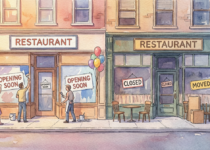
The Last Order: What We Lose When Neighborhood Spots Close Their Doors
About Author
