The Great Unfollowing: Why Gen Z is Building Private Corners of the Internet Again
The Algorithm Broke Something We Didn’t Know We Needed
There’s this moment at every party now where someone pulls out their phone and shows you a photo from a closed app you’ve never heard of. It’s their friend’s new apartment. Their roommate’s gallery opening. A dinner that happened last weekend. You weren’t there, and you weren’t supposed to be. That’s the whole point.
This is what the slowcial movement actually feels like on the ground. It’s not some grand rejection of technology. It’s quieter than that. It’s people realizing that the feeds we’ve been staring at for the past decade have been quietly reshaping how we connect, and most of us finally noticed we didn’t like what we became on them.
Gen Z started checking out first. Over half of them, to be exact, cut back their time on algorithmic platforms in 2024 compared to less than a third of millennials. That’s not just a preference shift. That’s a generational line being drawn. They grew up inside the algorithm. They know its tricks better than anyone. And they decided they wanted something else.
When Ephemeral Beats Permanent, When Private Beats Viral
Locket Widget landed quietly in the early months of 2025 and exploded. A photo-sharing app that only shows pictures from close friends, capped at a small circle, no algorithm, no feed, no metrics. By early 2025 it had hit 30 million downloads, almost entirely from people aged 18 to 24. The appeal is almost embarrassingly simple: you see what your people actually want to show you. That’s it.
There’s something worth sitting with here. An entire generation of young people looked at infinite feeds and algorithmic curation and said no thanks, I want to see my friend’s unfiltered photos again. I want to miss things. I want to feel like I’m being let into something instead of having everything pushed at me.
Meanwhile, Partiful Event Platform raised serious venture money in 2024 by building an app that deliberately copies the look and feel of Facebook Events from 2007. No algorithm. No suggested guests. No sponsored events in your feed. Just your people, your plans, and a deliberately retro interface that feels like a joke until you use it and realize it’s exactly what was missing. They’ve grown 400% year-over-year by being boring.
The Rise of Velvet Rope Culture Online
Private Discord servers have become the real town squares. Not the public ones. The closed ones. Between 2023 and 2025, the number of private servers organized around cultural communities grew by 60 percent. Music communities. Art collectives. Food enthusiasts. Fashion people. Niche everything. All of it happening behind closed doors, invitation only.
This is where culture is actually being made right now and most people aren’t seeing it. A photographer shares work with 200 trusted people instead of posting to Instagram. A musician tests new stuff with their actual community before releasing it. A restaurant opens and the real conversation happens in a server with 150 people who care, not in a public Instagram comment section where restaurants and customers are both just performing.
The velvet rope used to be exclusionary in a bad way. Now it’s just… practical. It’s the only way to have a real conversation online anymore. When you’re not designing for algorithmic engagement, you’re designing for actual connection. Those aren’t the same thing.
What We’re Actually Saying When We Say Slowcial
Trend forecasting firm WGSN Consumer Futures Trend Forecasting identified slowcial as a defining cultural behavior for post-algorithm culture. The term itself is pretty loaded. It’s not slow technology. It’s slow communication. Intentionality. Friction. The opposite of frictionless sharing.
But here’s the uncomfortable part: slowcial is also becoming another marker of class and access. If your cultural life exists in private Discord servers and invite-only apps, you’re already in a circle that knows how to find those spaces. You have friends who are in them. You have the social capital to get added. For people outside established communities, this new private internet can feel like the old gatekeeping just wearing a new outfit.
The slowcial movement isn’t a universal good. It’s a correction that works great if you’re already connected and poorly if you’re trying to break into something. It’s intimate and exclusionary. Both of those things are true at once.
Where This Actually Goes From Here
The interesting question isn’t whether this sticks. Gen Z has made it clear they’re done with the old feed model. They’re voting with their time and their apps. The question is whether this becomes the new normal or whether we end up with two parallel internets: the algorithmic one that most people still use because switching costs money and habit, and the slowcial one that’s where the culture actually moves first.
That split is probably where we’re headed. The big platforms aren’t going anywhere. But the people most thoughtful about their attention and their connections are already gone. They’re in private servers and photo widgets and deliberately retro event apps. They’re rebuilding what they had before the feed swallowed everything: actual community with actual people.
What do you think? Are you in those closed spaces? Do you miss the algorithm-free internet or do you think slowcial is just another form of people getting too precious about their culture? I’m genuinely curious where you’re spending your actual attention these days.
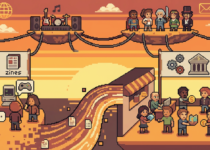
The Venue Obituary: Internet subcultures and the fandom economy

The Silent Moderator: How Office Design Shapes Who Gets Heard
The Status of Overwork: How Organizations Turn Busyness into a Badge of Honor
About Author
